
Memory management and shared processing.
Kerneta builds memory management and shared processing systems for AI. .dai is the first product: an open format that keeps an AI's memory in plain files you own. It is the foundation, not the destination. The same machinery that decides what an AI should remember also decides what work needs doing, what can be reused, and what never needed a model in the first place. We have several products to come in this domain.
We started from a frustration that is a choice rather than a technical necessity: the most useful thing an AI can have is a memory of your work, and today that memory is lost when a conversation ends, locked inside one company's product, or affordable only if you can pay to re-read your entire history on every question. We are raising our first round.
Three things, and we hold ourselves to all of them
Affordable enough that cost stops being the reason you stop
A developer working with an AI hits the context wall within weeks, and pays more for every question as the project grows. Recalling from .dai instead of re-reading everything means a question reads a mean of 10,065 tokens of context rather than a 103,601-token history. That is measured, with the arithmetic shown.
Yours, in files you can open
Your memory is plain text on your disk. Read it in any editor, grep it, put it in git, delete it. No database to run, no server required, no company standing between you and the record of your own work. If we disappeared tomorrow your files would still open.
Not tied to one AI company
The same store works with Claude, GPT, or a model running on your laptop. The format is portable; the accuracy is not identical. The same store spans 14.0 points across the five answering models in our cross-actor run, and we publish that spread rather than the best row in it. Memory portability is becoming the thing the big labs compete on; we think it should belong to you rather than be a feature one of them grants you.
Who is building this
A small team, working in the open, publishing the evidence as it goes.

Amin's doctoral research at the University of Edinburgh was on biosensing and wireless, battery-free RFID sensing systems: building instruments that measure something real without a power source of their own.
In 2012 he built the world's first lifeguard robot. His research and products have won 15 national and international awards. He is also co-founder of Eyesight Electronics, which treats amblyopia (lazy eye) and other eye conditions, and reports faster recovery at lower cost than the treatments it replaces.
The thread through all of it is the same: saving and improving lives with technology, and making it cheap enough that the people who need it can actually have it. That is the core of this work too.
At Kerneta he created the .dai format and built its retrieval engine, taking it from a prototype to a measured 83.00% on LongMemEval with GPT-4o, using plain text files rather than a vector database. He set the rule the project runs on: every claim traces to a run anyone can reproduce, and the numbers that go against us are published too.
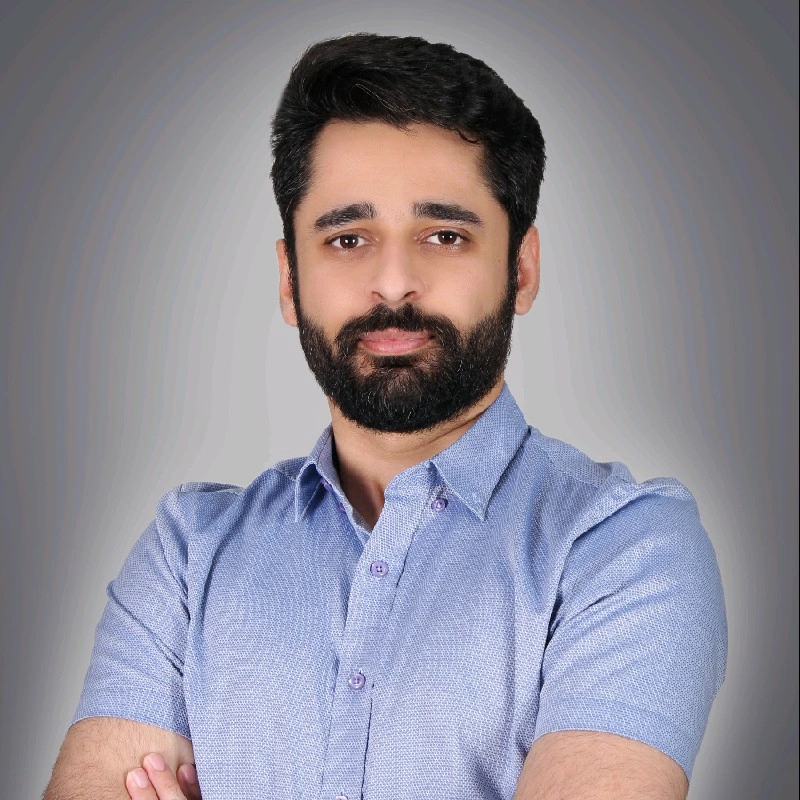
Ali specialises in bringing artificial intelligence and machine learning into the real world through embedded systems engineering. With a Master's degree in AI and work spanning AI/ML, real-time systems and IoT architecture, he has worked across the full stack: from training and deploying machine learning models to implementing them on resource-constrained hardware that actually has to run in production.
His AI work has ranged from environmental sensing to designing systems where intelligence runs at the edge, on microcontrollers and IoT devices with minimal power and memory. He also led embedded systems engineering across multiple hardware platforms while maintaining the compliance required for production work, communication protocols, and the kind of debugging and troubleshooting that separates working prototypes from shipping products.
The core challenge he solves is the same one that defines modern AI systems: making sophisticated computation work in constrained environments, limited power, limited memory, real-time requirements, without compromising reliability. That is where AI meets engineering: not in the theoretical space, but in the constraints of the physical world.
We are raising to build the next generation of AI
.dai is the first thing we have shipped and measured, not the last. We started with memory because it is where the frontier is most plainly broken, but the conviction behind it, that capable AI should be open, affordable and yours, is what we mean to bring to the models themselves. We are entering this landscape to compete with the biggest names in it: to build models and systems that open new doors rather than new paywalls, that widen who can use them, and that push accuracy where it has stalled.
What comes next from Kerneta runs the whole stack: the AI models, the systems around them, the layer that manages and orchestrates them, and physical AI in the world. The founders have built world-firsts before, and this is the start of the next one. A memory the machine actually owns is the first door it opens.
We are raising our first external round, and we need capital that can move at the speed this field does. We intend to expand fast and ship new products rapidly, taking the next steps across the stack while the ground is still open. If you want to back that early, while there is still room to shape it, we want to hear from you.
Who we are looking for
We are looking for people who see what we see: memory is the missing foundation of useful AI, not a feature bolted on top of it. A model forgets the moment a conversation ends or a project outgrows its window, and everything it learned is compacted away. That loss is measurable. On the same benchmark, the same GPT-4o scores 60.60% with no memory and 83.00% with ours, a 22-point jump from the memory alone. Memory is what lets a model stay accurate over a long history, do more with what it is given, and reach more people at once. And it does more with less: on that same benchmark a question reads about 10x fewer tokens than pasting the history in, so the same budget goes up to ten times further, or costs a tenth as much. It is the ground every step after this is built on, which is why we started here. We are not here to make AI a little cheaper. We are here to give it the thing it has never had, and we are coming to disrupt.
We are also plain about what we will not do, before anyone spends time on us: no military use, nothing built to kill, and no surveillance of people. Not as a current preference but as a condition. If that rules us out for a fund, say so at the first email rather than the last.
What we do want to put money into is AI that saves and improves lives: systems that support people rather than replace them, that reduce suffering and pain, and that are safe by design. That is the through-line of everything the founders have built before this, from a lifeguard robot to treating eye conditions, and it is what memory management and shared processing are for: making capable, trustworthy systems cheap enough to reach the people who need them.
Register your interest
Nothing on this page is an offer to sell, or a solicitation of an offer to buy, securities of any kind. It records that you would like us to get in touch. Any actual investment would follow direct discussion and the appropriate documentation. We use your details to reply to you and for nothing else.
Anyone can use this. We reply personally, we use your details to reply to you and for nothing else, and there is no list to unsubscribe from afterwards.
Built and measured so far
Every benchmark figure in this ledger links back to a measured run on the results page, with its method, its sample size and its caveats. Where a number is interpolated rather than measured, we say so on the page it appears. Figures in the founder biographies above come from that work, not from this project's runs, and are not covered by that guarantee.
Work with us
We are open to collaboration and partnership, and we want to work with people who will push the format further than we can on our own: teams building on .dai, organisations that want it inside their own products, researchers who want to test it against something harder, and anyone writing a reader in another language.
We are a small team, and a hard question helps us more than a compliment. If you think one of our numbers is wrong, tell us: that is the most useful message we can get.